Showing posts with label Common Grackle. Show all posts

July 2017

Images recorded at White Memorial Conservation Center Bird Blind, unless stated otherwise on the White Memorial Foundation Property.  Time stamped is Eastern Standard Time, daylight savings time is not used.

Mammals

Bobcat at Plunge Pool
Eastern Chipmunk at Plunge Pool
 Southern Flying Squirrel at Plunge Pool
Southern Flying Squirrel at Plunge Pool
Eastern Gray Squirrel at Plunge Pool
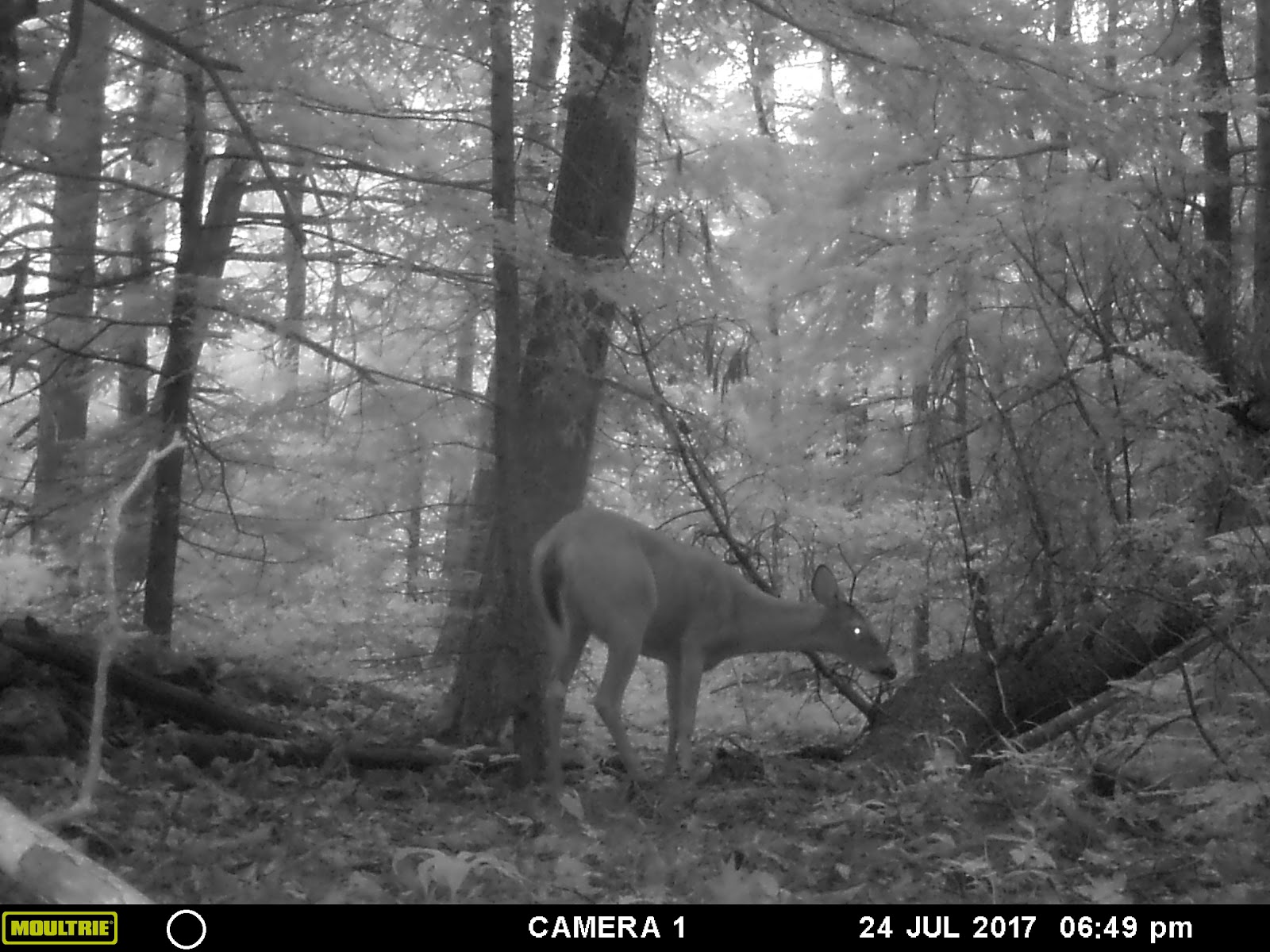
White-tailed Deer Fawn at Ice House Marsh
Eastern Chipmunk at Cathedral 
Black Bear at Cranberry Pond
Bobcat at Cranberry Pond
Cottontail Rabbit at Ice House Marsh
White-Tailed Deer at Old Camp Townshend
White-tailed Deer at Cranberry Pond
White-Tailed Deer at Ice House Marsh
White-tailed Deer at Old Camp Townshend
White-Tailed Deer at Cathedral
White-tailed Deer Buck at Ice House Marsh
Eastern Gray-Squirrel at Cranberry Pond
Raccoon at Ice House Marsh

Birds
Red-bellied Woodpecker at Cranberry Pond
Gray Catbird at Ice House Marsh
Juvenile American Robin at Duck Pond
Common Grackle at Old Camp Townshend 
Gray Catbird at Duck Pond
Flycatcher species at Ice House Marsh
Blue Jay at Cranberry Pond-West
Veery at Ice House Marsh


Baby Birds Are Hatching Out All Over!

Red-bellied Woodpecker

by Patty Levin from http://www.birds.cornell.edu/


Downy Woodpecker from


Common Grackle by John Borom

from http://www.weeksbay.org/


Baltimore Oriole by Jeff Lewis from


American Crow by Darlene Knox


Despite the absolutely awful weather that has plagued us for the past few days it seems as if baby birds are hatching out all over White Memorial. Some of those birds that hatched in the past 2 or 3 weeks are already fledging. The photos above depict just a few of the many birds that we saw yesterday and Sunday. Pt. Folly was especially productive. Amazingly, 2 of the Baltimore Oriole nests with young were only 25' apart. They were near campsite 3 for anyone interested in seeing them. Also around that site and the observation platform were 4 Common Grackle nests. Two of them had young fledging out when a pair of Cooper's Hawks came winging in. Each hawk grabbed a young grackle before flying off with many angry adult grackles and other birds in hot pursuit. I wish we could have gotten photos of all that action! Grackles around the Museum Area and N. Shore Marsh also have a ton of babies. While not nearly as abundant as some other bird species, Red-bellied and Downy Woodpeckers seem to be having a very good year for producing young. I found active Red-bellied Woodpecker nests around the Museum, behind Ongley Pond, and along N. Shore Rd., and Downy Woodpecker nests along the Lake, Windmill Hill, Butternut Brook, and Cranberry Pond Trails and at the Bantam Lake Outlet. American Crows have been nesting around here since March, and now fledglings are everywhere. I found 3 Fish Crows with their American cousins at Wheeler Hill yesterday. Other less common species that we found feeding fledglings included Blue-winged Warblers at Icehouse Field, Eastern Towhees at Wheeler Hill, Wood Thrushes along the Lake and Butternut Brook Trails, Black-and-White Warblers along N. Shore Rd., and Barred Owls at Wheeler Hill and Pine Island. My next few blog postings will probably cover more breeding bird activity, including results from the Litchfield Hills Summer Bird Count, as this is the season for them. Despite the hoards of mosquitoes this would be an ideal time of year for you to go out and look for those birds while they are busy attending their young.

Migrant Fallout, Tuesday, 5/3/2011

Gray Catbird photo by Leo Kulinski, Jr.

from whalesandwolves.com


Red-winged Blackbird immature male

photo by Bob Stanowski


In ornithological terms a fallout is any mass downing of birds from their flight. It is usually caused by storms or other bad weather, but can also be caused by exhaustion or hunger. In the cases of the latter 2 causes they most often happen after birds have crossed a large expanse of water (like the Gulf of Mexico) or have made some other very long flight. Fallouts caused by storms or other foul weather can occur anywhere. Sometimes the weather doesn't even have to be all that bad to bring birds down. That was the case this past Monday night and Tuesday morning when conditions were cloudy and a little foggy with a couple of showers and some drizzle. It was unpleasant, but by no means severe. However, it may have been bad enough to bring a lot of birds down to the N. Shore Marsh and several of White Memorial's trails that run along or near this large wetland. It was also obvious that these birds were hungry, as I saw a lot of feeding activity. Lucky for them, fishflies and other insects were in abundance. I headed down there around 2 p.m. with the intention of conducting our first Breeding Bird Census of 2011. Even though the spring migration is still in full swing, some birds, like Red-winged Blackbirds and Swamp Sparrows, are establishing territories for the upcoming breeding season. Now that N. Shore Marsh is more of a shrubby hardwood swamp than a marsh it regularly hosts almost 50 species of birds as nesters. Back in the 1960's, '70's, and '80's when this wetland was mostly mixed herbaceous and shrub marsh it only hosted about 20 species as nesters. In this case, succession has been beneficial to birds. Many species have been added to this area, while very few have been lost. On Tuesday I found 66 species, many of which would never breed in a wetland. A lot of these were in trees and shrubs along the Lake, Windmill Hill, Ongley Pond, and Mill Field Trails as they run along the northern border of N. Shore Marsh. For species that do breed here it was difficult to tell which individual birds are likely to remain as summer residents and which were migrants that will move on northwards. That's why I try to conduct 10 censuses of each of our 5 Breeding Bird Census plots from early May through late July. This helps to weed-out the breeders from the migrants. Though I was tempted to publish a complete list of the birds that I found Tuesday, I decided that it would be unnecessary since readers can go to ebird.org to view it. Instead, shown below are the species that I found in higher-than-average numbers for early May and their average expected numbers in parentheses:

Northern Flicker - 12 (4); Great Crested Flycatcher - 10 (4); Eastern Kingbird - 14 (4); Blue-gray Gnatcatcher - 19 (6); Gray Catbird - 33 (16); Yellow Warbler - 69 (22); Common Yellowthroat - 23 (12); Song Sparrow 24 (8); Swamp Sparrow - 31 (24); Red-winged Blackbird - 88 (40); Common Grackle - 92 (30); Baltimore Oriole - 13 (3); American Goldfinch - 44 (10)


Some of the figures above also include birds seen at the Museum Feeders and in Ongley and Activity Fields. These birds regularly commute back and forth between these areas and N. Shore Marsh. Other birds seen in higher-than-average numbers around all of the above-mentioned areas combined included Black-capped Chickadees, Tufted Titmice, American Robins, Pine Warblers, and Black-and-White Warblers. These last 2 species were twice as abundant as usual. Some of the other species, like titmice, aren't generally considered to be migrants, but their recent upsurge in numbers might indicate otherwise. Some of the other species, like Red-winged Blackbirds and Common Grackles, stage much of their migration activity in March and April, but are obviously continuing to move through so far this month. With persistent lousy weather it is no surprise that the migration is prolonged this year, and that fallouts are occurring.

Bald Eagle & Other Spring Migrants

Adult Bald Eagle photo by Paul Fusco
This past Saturday, March 5th, was the first really spring-like day that northwest CT. has experienced since the New Year's weekend. The temperature rose to 52 degrees during a brief period of sunshine in the early afternoon. It was during this time that we filled the bird feeders and did some other outside work. The highlight was looking up and seeing an immature Bald Eagle flying over the Museum Area. It had come in rather low from the southeast, and then turned and headed due north; all the while circling and gaining altitude. In all likelihood, it had descended earlier to the mostly frozen Bantam River or Lake to look for a meal. Unlike the one in the photo above, the bird that I saw was a second-year immature. It was discernable as such by a mainly black beak and dark eye. It also had a heavily mottled brown and white underbody and underwings, brown and white tail, and completely brown upperbody and upperwings. Its presence overhead didn't seem to phase the large, mixed flock of blackbirds at the Bird Observatory's feeders. Their numbers have increased noticably in the past few days. This day's count consisted of 75 Red-winged Blackbirds and 27 Common Grackles. Oddly, there were no Brown-headed Cowbirds with them. Since Song Sparrows hadn't been seen at these feeders since late December, it is likely that the bird present here this day was an early spring migrant. The mixed flock of 21 American Robins and 15 Cedar Waxwings eating fruit in the Red Cedar tree behind the Activity Shed could have been early spring migrants or over-wintering birds. Virtually all of the birds seen around the Museum Area this day were also singing. Especially vocal were American Tree Sparrows, Northern Cardinals, Tufted Titmice, White-breasted Nuthatches, and Red-winged Blackbirds. They all made it sound like spring!

Early Spring Migrant Birds

Canada Geese photographed at
Bantam Lake by Bob Stanowski
Eastern Bluebird photographed at
White Memorial by Bob Stanowski
It may be February 25th, and it may only be 34 degrees outside with a cold rain, but some birds are migrating back to and through Connecticut, anyway. Most of these early birds are short distance migrants that spent the winter in New Jersey, Delaware, Maryland, or Virginia. The previous blog post of mine touched upon some of these birds, along with an unusually early American Woodcock. Since then, more of the "regular" early spring migrants have arrived or increased in number. Chief among these are blackbirds, bluebirds, and Canada Geese. Even though White Memorial's Museum feeders have hosted up to 12 Red-winged Blackbirds all winter, we now can safely say that the migrants are here. The numbers around the Museum have increased somewhat, there are now a few at the Bantam Lake Outlet, and a mixed flock of 60 Red-wings and 20 Common Grackles has joined the European Starlings at Arethusa Farm. Eastern Bluebirds had been scarce around White Memorial during January and the first half of February, but we counted a combined total of approximately 25 around the Museum Area, along Webster Rd., and at the Bantam Lake Outlet for the Great Backyard Bird Count this past long weekend. This count only produced about 300 Canada Geese and 75 Mallards at the Bantam Lake Outlet. These have been typical numbers all winter. Therefore, it is highly likely that many of the 1210 Canada Geese, 155 Mallards, 34 American Black Ducks, and 16 Common Mergansers that I counted there last evening were newly arrived migrants. It should be noted for anyone visiting the Outlet that the number of birds is a lot lower in the morning and throughout much of the day because many of them go elsewhere to feed, and many of the new arrivals that have migrated all day don't settle in until evening. It is quite a spectacular sight to see wave upon wave of geese coming in to land in this relatively small area. If you wish to witness this yourself in the next week or so, you should park off N. Shore Rd. near Pt. Folly, and either walk to the Pt. Folly observation platform or walk down N. Shore Rd. to the Outlet bridge. High snow banks are currently making it impossible to park at the Outlet bridge.


Early American Woodcock & other birds on 2/18/11

American Woodcock photo from
On Friday, 2/18/11, Jim Kandefer, Mike Amodeo, and I censused several parts of White Memorial for the Great Backyard Bird Count. We came up with fairly good numbers of most of the expected species around the Museum Area, Pike Marsh, Bantam Lake Outlet, and N. Shore Rd. This included 4 Wood Ducks at the Outlet, 2 Red-breasted Nuthatches at the Museum feeders, and a total of about 25 Eastern Bluebirds. We ended the day with a successful hour and a half of counting along Webster Rd., including Catlin Woods and Miry Brook Marsh. Arethusa Farm yielded a large mixed flock of blackbirds that included about 50 Red-wings and 20 Common Grackles with 500+ European Starlings. Unfortunately, we couldn't find the American Kestrel that we saw there on Wednesday. Heading back into Catlin Woods we heard a Great Horned Owl hooting from the area of the intersection of White's Woods and Webster Roads. Then we were astounded to hear an American Woodcock giving its "peent" call from Miry Brook Marsh. After a few "peents" it picked up and flew around the marsh before settling back down and resuming "peenting". Then it lifted off, flew around the marsh, up Webster Rd. over our heads, and northbound over Catlin Woods. We didn't hear it again after that. I think that this is only the third time that I've encountered a woodcock as early as February in the Litchfield/Morris area. Right after the excitement of finding this bird had subsided I started whistling for Northern Saw-whet Owls. We have found these birds quite regularly in Catlin Woods in mid and late February. After about 2 minutes of intermittent whistling we heard a Saw-whet answer from the north side of the road in the thick hemlocks. We saw it fly among the sapling-sized trees and then disappear. Not wanting to subject it to any more disturbance or being preyed upon by the Great Horned Owl, we stopped whistling and left it alone. When I get all of the results from our GBBC counters compiled, I'll post them in a future bog.