Showing posts with label Becca Solnit. Show all posts

Monthly Snake Cover-Board Check -- August 2011

Eastern Garter Snake basking on Osmunda Ferns.
photo by James Fischer
(l to r) Madeline Bove, Twan Leenders, and Becca Solnit peeling
through the Snake Cover-Board Pile at Apple Hill Lower Field.
photo by James Fischer
Twan Leenders, CT Audubon Society Conservation Biologist, joined us yesterday to see our Snake Cover-board Monitoring program.  It was great having Twan because he offered us all kinds of advice about how can improve and modify the program.   It also gave us an opportunity to show him unique parts of the property that we conserve.  We encountered 3 species: 8 Eastern Garter Snakes, 3 Northern Redbelly Snake, and 1 Eastern Milk Snake.  We check all of the 12 cover-board piles on the property between 12:30 p.m. through 15:10 p.m. EST.  Madeline Bove, Ryan Gannon, and Becca Solnit were also present, which begins to explain why this session was so efficient, because we had so many hands and eyes present that searching for the snakes.

Cerceris Wasp Biosurveillance of Emerald Ash Borer -- 2011 Initial Results

Cerceris fumipennis with EAB
Cerceris fumipennis with Emerald Ash Borer
Photo by Phillip Careless
www.cerceris.info
It was a great day of catching Cerceris Wasps and collecting Buprestid Beetles at Morris Town Beach Ball Field.  Olivia Riccio and Becca Solnit helped capture 16 beetles in 1 hour and 30 minutes.  There were a total 36 nests in this colony.  The weather was mild at approximately 80 degrees Fahrenheit, mostly cloudy sky, and a gentle occasional breeze from the southwest at 0 to 2 mph.

Amphibian Cover-Board Experiment Monthly Check -- July 2011

Wall Flower
A Grey Treefrog trying to blend into exterior of White Memorial's Green Barn.
photo by James Fischer
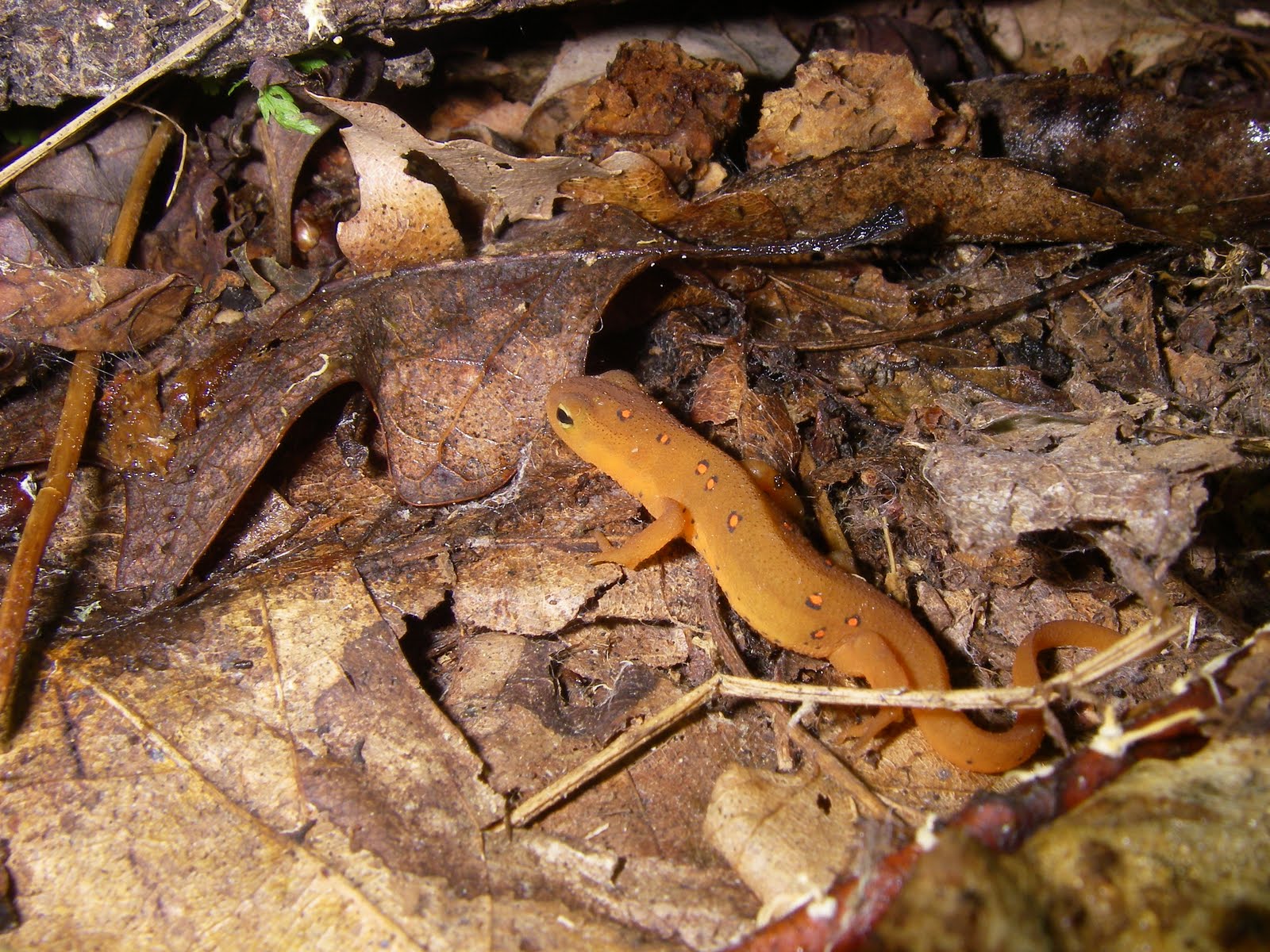
Becca Solnit and Ryan Gannon helped check amphibian cover-boards examining the differences of detection rates between soft and hard wood types.  We encountered 28 Redback Salamanders, 11 Red Efts, and 1 Spotted Salamander under the softwood boards.  A total of 20 Redback Salamanders, 17 Red Efts, and 1 Two-lined Salamander were observed under the hardwood boards.  We have a total of 132 stations examining the boards in a pairwise comparison, of which 45 (34%) stations had amphibians.  The weather was mild with temperatures in the mid 70's to low 80's (degrees Fahrenheit) and complete cloud cover.  Although the ambient relative humidity was high, the leaf litter and humus was fairly dry, which may explain why there were so few stations with amphibians today.

Introducing Our Summer Intern -- Rebecca Solnit

Rebecca Solnit
Becca is a Bachelor of Arts candidate at Dickinson College where she will be entering her senior year as a history major.  Becca lives in Morris and grew up spending her vacations at her grandparent's home on Bantam Lake.  She now lives there full time with her family and decided to learn a little more about the Bantam Lake environment by volunteering her time at White Memorial.  Becca has worked in other research related endeavors in the History Department at Dickinson College in Carlisle, Pennsylvania.  She recently returned from a trip to India.  Read about her adventure at her blog by clicking on her profile.  Becca is helping us with a wide variety of projects this summer, so if you are in the neighborhood please stop and introduce yourself.

An Examination of Bear Poop

It's not every day I get to pick apart a piece of poop, but yesterday proved to be an exception. After a reported sighting of a mother bear and two cubs on the property, Jamie, fellow intern Olivia and I, set out to locate possible "nursury trees," which would be a good location for a wildlife camera. Nursury trees or "baby-sitting trees" are so named because a mother bear likes to find such trees to provide a sort of safe jungle-gym for her cubs, so she can leave them in this kind of sheltered grove while she sees to the business of the day. Nursury trees typically have thick bark and lots of low branches, so little bears can practice their climbing. Jamie had already scouted out an area just north of Cranberry Swamp, which has both lowland and upland habitats, which he thought had some ideal nursury trees. Though we didn't find any sign of the bears amongst the trees, on our way back along Cranberry Swamp Trail, we came across a nice spicemen of bear scat.

Bear Scat with Deer Hoof on Ruler

The first thing we noticed about this particular spicemen was how hairy it was. Now, I don't mean hairy in the treacherous sense of the word, but hairy as in, bushy, furry, and full of deer fur. Jamie pulled out his tweezers and other poop-examining tools, and extracted a small triangular object. At first glance, it looked like a tooth, but after Jamie explained it was made out of caratin (which is what our nails and hair is made out of), we came to the conclusion it was a claw. More specifically, Jamie clarified, it was a deer hoof. The hoof was hardened on the bottom, which means that it didn't belong to a stillborn fawn, but to a deer who had been up an walking about.

A black bear doesn't exactly have a strong moral conscious, and so wouldn't hestitate to eat a nice little fawn the had been bedded down by its mother. For the first 4 weeks of its life, a baby deer is pretty uncoordinated. The mother will typically create a nice bed for the fawn to stay in until it is strong enough to really move around on its own. What good luck for the bear who happens upon such an easy target! Who knew you could learn so much by just stopping to look at a piece of poop!

Porcupine Update

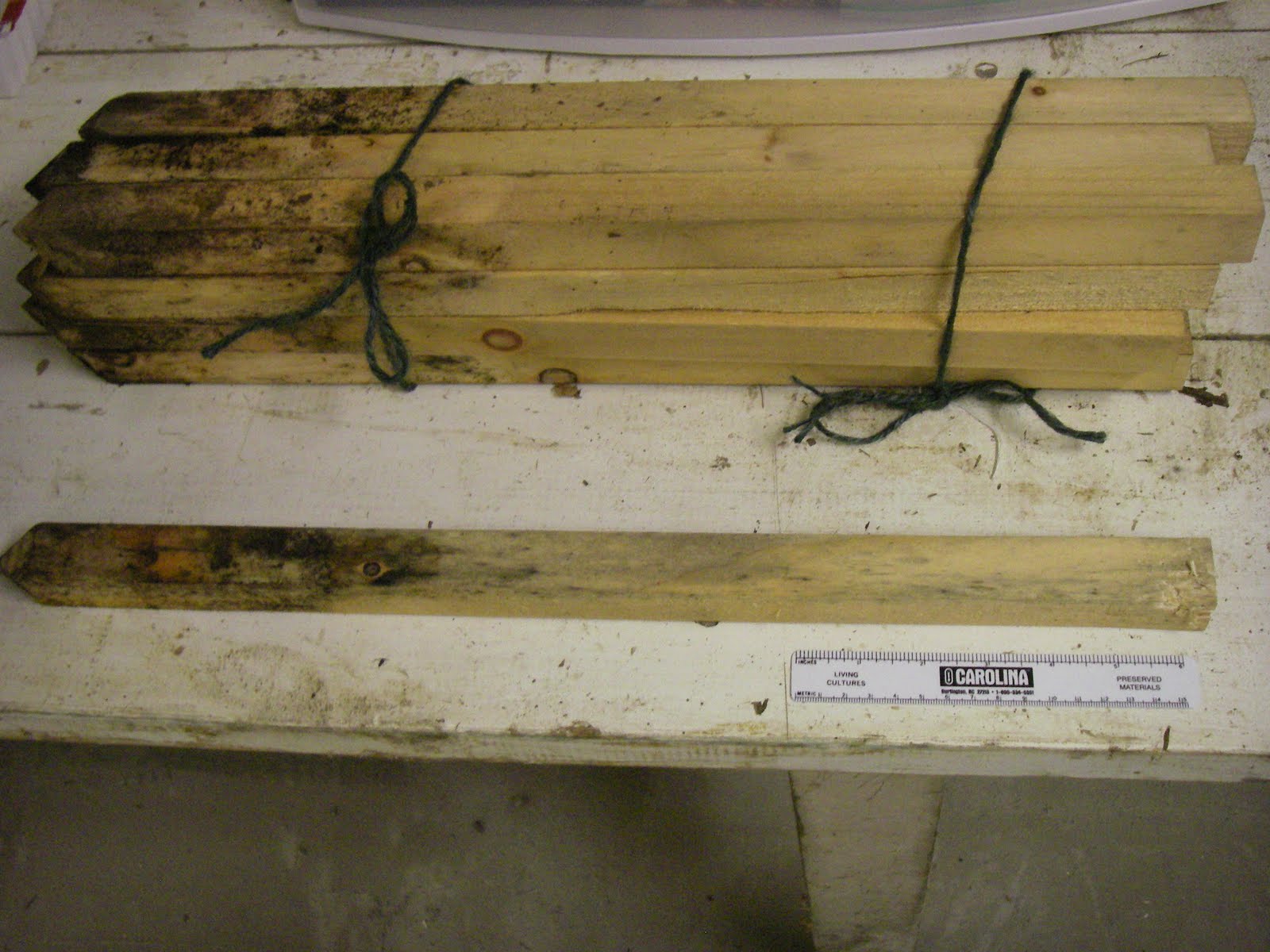
Salted Stakes Removed in June

This past winter, we found evidence of a porcupine for the first time on the White Memorial property. In an effort to determine whether this porcupine is still on the premises, Jamie has been conducting an experiment for the past two months. Jamie's experiment relies on the porcupines' high affinity for salt, especially during the summer months. With this in mind, Jamie has placed 16 wooden stakes in a grid around the area where the evidence of the porcupine was found this winter. The stakes have been soaked in a salt-water solution with approximately the same salinity as the ocean in hopes that if Mr. or Mrs. Porcupine is still on the property, he or she, will gnaw on these salty stakes.

On Friday June 17 and Tuesday June 21, Jamie and I went around replacing the salty stakes for the second time since he began this experiment. Using a hand-held GPS and a carefully marked trail map, we trekked through the woods in the five ponds area, checking for possible porcupine chewing as we went. (This may sound easier than it actually was because since the stakes were placed by GPS coordinates, they weren't exactly in the most convenient locations.)


Chewing on Stake 179

As of this point, if the porcupine is still around the property, it has chosen not to chew on our carefully positioned, salty stakes. Most stakes had no evidence of anyone chewing on them. Some, such as stake 179 which is situated off the south-east corner of Beaver pond, showed some evidence of gnawing, but Jamie doesn't believe the marks were left by a porcupine (see above photo). Stake 180 also had some interesting marks on it, though once again, not from our prickly friend. We found two small holes at one corner of this stake (see photo below). Jamie believes that these holes could have been made by a bear's canine tooth, as a bear will sometimes mark his or her territory by biting and wounding trees in addition to other scent-related methods.


Holes on Stake 180
As they say, "third time's a charm," and maybe the porcupine will decide to chew on the third round of salt-soaked wooden stakes we have just finished positioning!

Amphibian Cover-Board Experiment Monthly Check -- June 2011

We checked our cover-board experiment comparing soft and hard wood types in a pair-wise comparison yesterday.  Olivia Riccio and Rebecca Solnit (granddaughter of the owners who donated the land that hosts this experiment) were cowhands by checking most of the boards and calling out the species identification as we progressed through the grid.  We observed 69 redback salamanders, 4 red efts, 1 spotted salamander, and 1 wood frog under the boards.  A total of 55 out of 132 stations detected an amphibian.

Spotted Salamander photo by James Fischer

Redback Salamander photo by James Fischer

Lead phase Redback Salamander photo by James Fischer

Red eft life stage of Red-spotted Newt photo by James Fischer

Adult Wood Frog photo by James Fischer